
Stock in more than one place, sold at more than one price, collected after the fact.
A trading business keeps books that have to hold all three at once: what sits in which depot, what a customer actually pays for it, and what is still owed once the invoice is out the door. This is what Factura Financials does with each of those, as built.
What a trading business needs from its books
Six things, each answered by a feature that exists in the product today, not on a roadmap.
- Stock split across more than one depot.
- A godown master is named, typed and hierarchical, with a company-level switch to turn multi-godown tracking on. See Inventory →
- A different price for a different customer.
- Price levels and price lists are their own masters, linked by stock group, and a price list row carries the date it becomes applicable — so a price change can be scheduled in advance rather than typed over. See Inventory →
- Orders written on the road.
- The mobile app creates and pre-closes orders, opens and closes a cash shift for route reconciliation, and looks up a customer’s pending bills before the rep knocks on the door. See Mobile Sales →
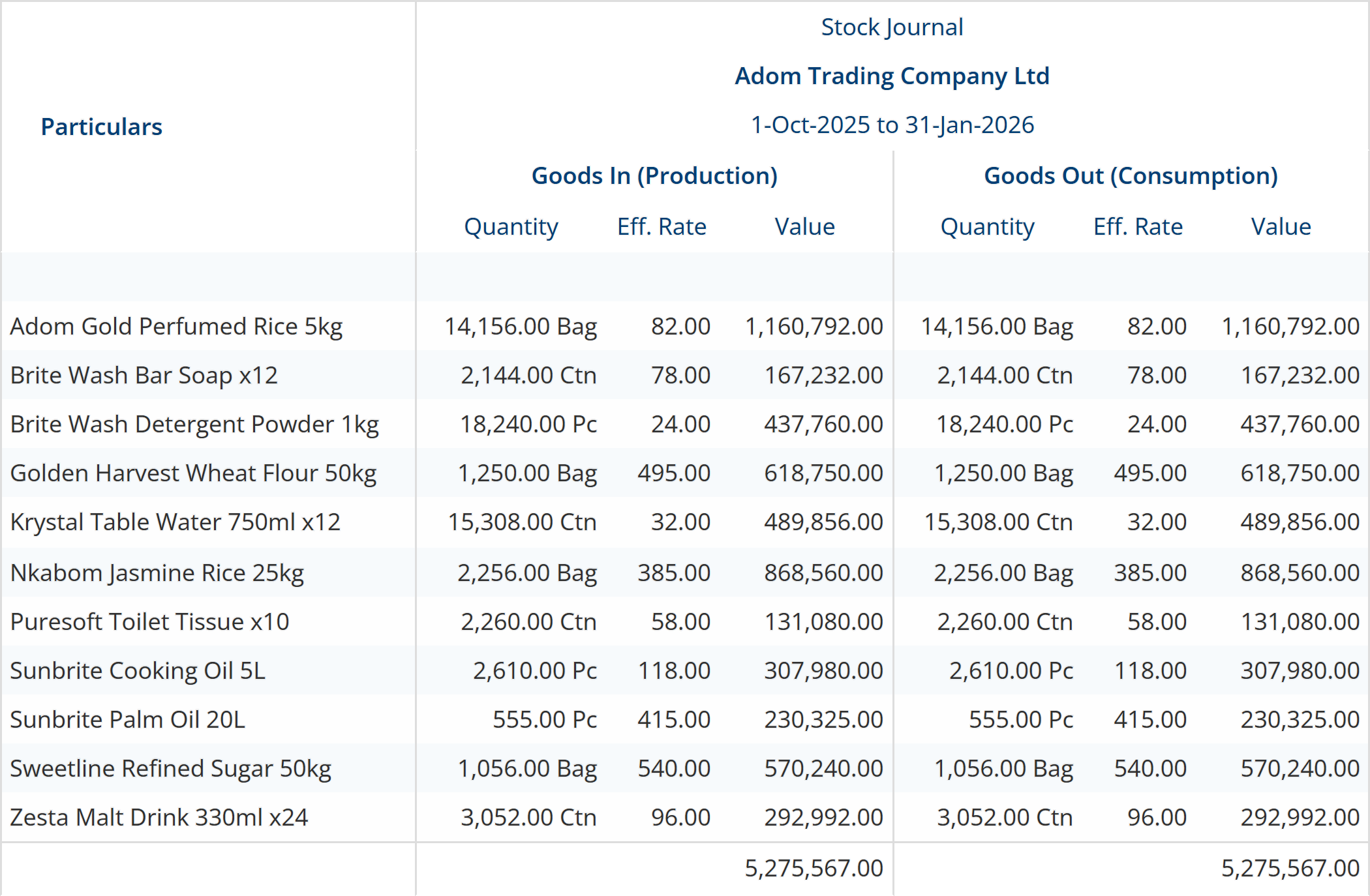
- Knowing what moved between depots, and at what value.
- The stock-transfer view above reads directly off the same batch-allocation rows a transfer voucher writes. See Inventory →
- Chasing what customers owe.
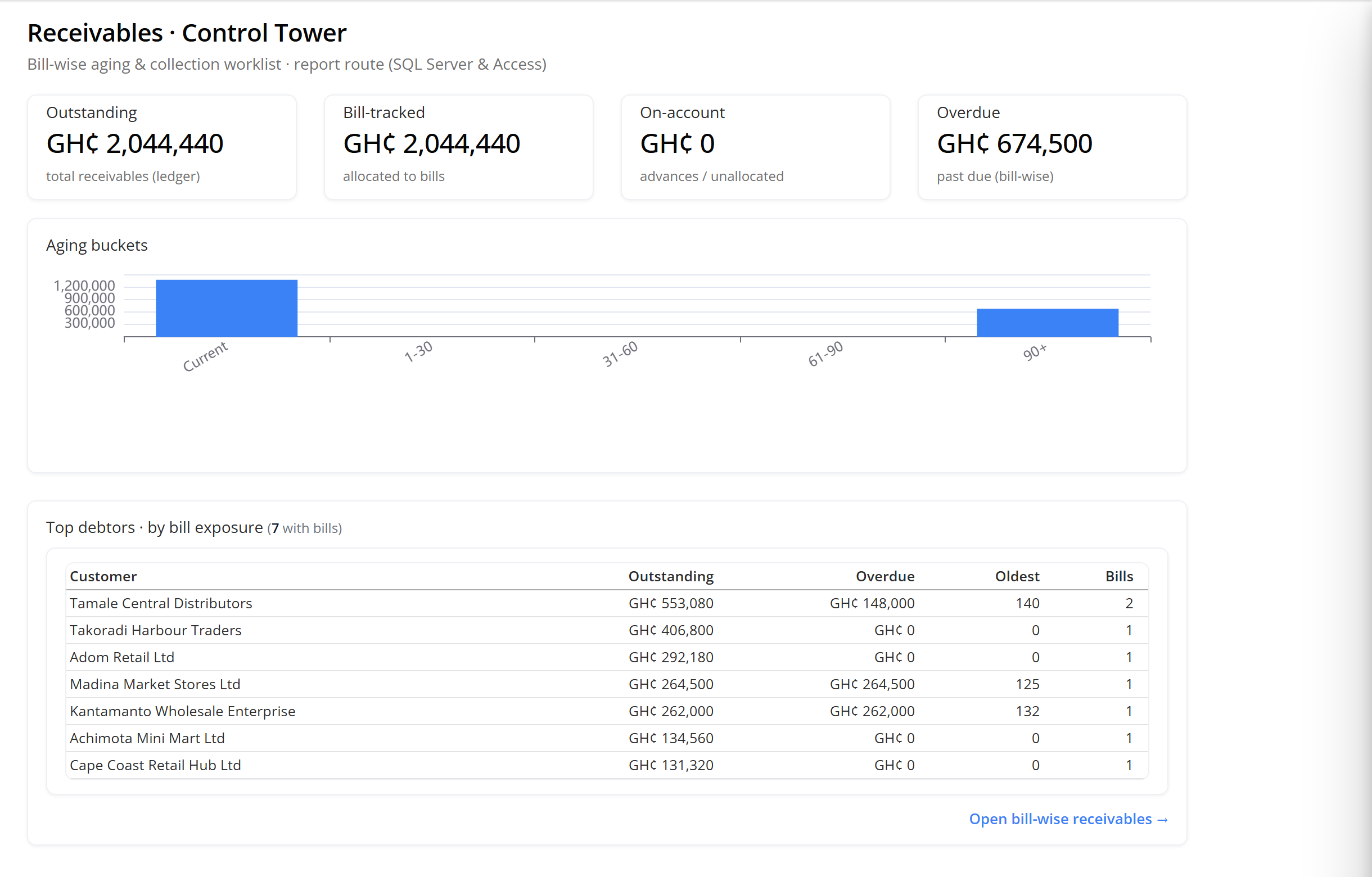
- The Receivables control tower ages every bill, ranks customers by exposure, and opens straight into the underlying bill-wise report. See Sales & Invoicing →
- One ledger under all of it.
- Sales, purchasing and stock movement post through the same voucher pipeline as the general ledger — a trial-balance line and the invoice behind it are the same document, not a summary of one. See General Ledger →
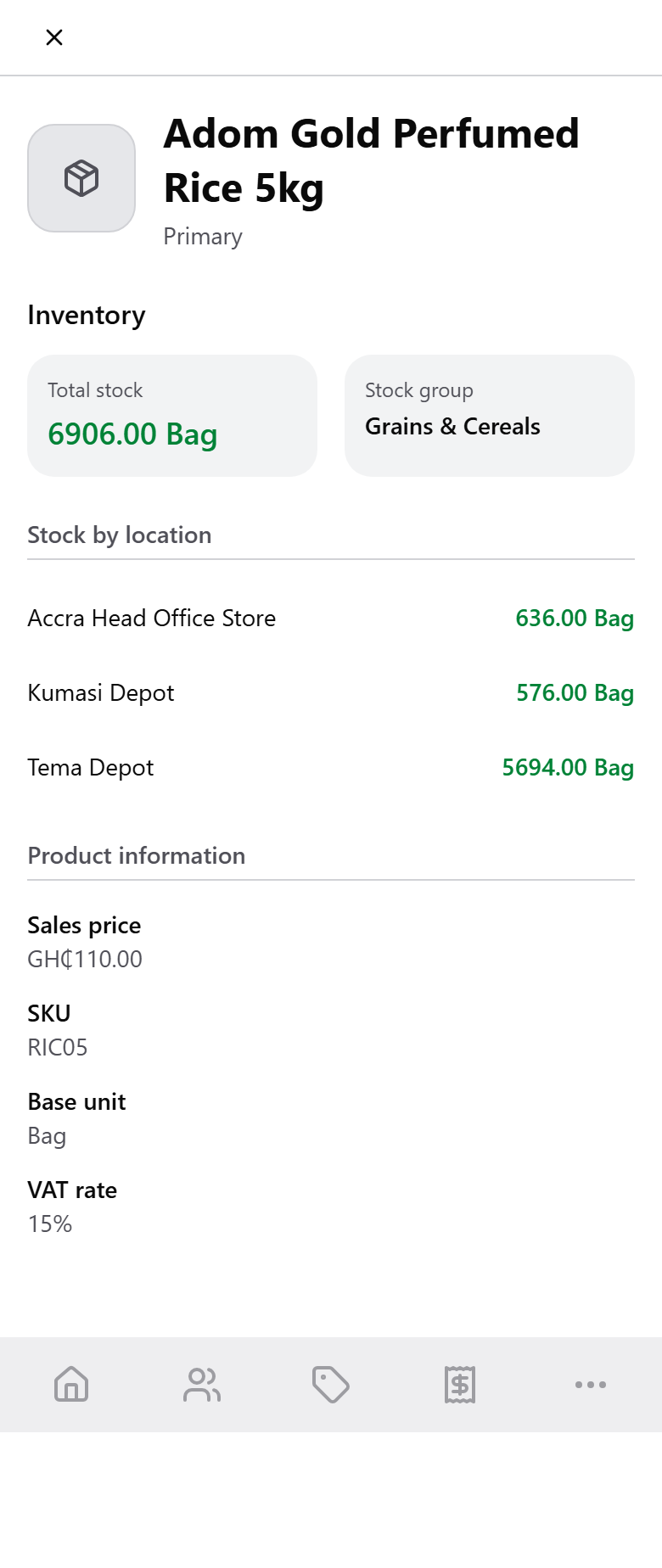
Stock per depot, checked from a phone
A rep or a supervisor can check what is actually on the shelf at each location before promising it to a customer — the same stock figures the desktop reports use, split by godown.
What is owed, and to whom it sits
Distribution runs on credit. The control tower splits bill-tracked exposure from on-account balances and ranks the customers carrying the most of it.
Reports they run
Monthly Sales Register, Sales/Purchase Order Book, Sales/Purchase Bills Pending, Bills Receivable, Stock Summary (classic and new), Stock Query, and Category Analysis — all part of the standard report catalogue, none of them a custom build.
What we do not do
Bank reconciliation is manual tick-and-match against your own record of what has not cleared — there is no bank statement import. And the bank-transfer file formats (Zenith, Standard Chartered, ADB, UBA) live in Factura HRMS’ payroll module, not in Financials; Financials has no bank-file-format export of its own.
Before you ask us
Can a price change take effect on a future date?
Yes. A price-list row is linked to a price level and a stock group and carries the date from which it applies, so a new price can be entered ahead of time rather than typed over on the day.
Can reps sell without waiting for a connection?
The mobile app is an installable web app, not an offline transaction system — there is no write queue or background sync, so each order or invoice needs a connection to save.
How many depots can we track?
The godown master is hierarchical, with a parent link and a check against loops, but no fixed depth limit in the code.
Built for a different sector: Manufacturing, NGOs, Credit societies, Oil & gas, or back to Factura Financials.
See a month close, end to end
Thirty minutes. Post, reconcile, report — and you can stop us anywhere.