
The processes that usually live in email and a shared drive.
Six modules — tasks, disciplinary, separation, training, policy and surveys — each giving a process a state, an owner and a dated record. This page says what each one holds and where each one stops. It is the detail behind the people operations summary on the Factura HRMS page.
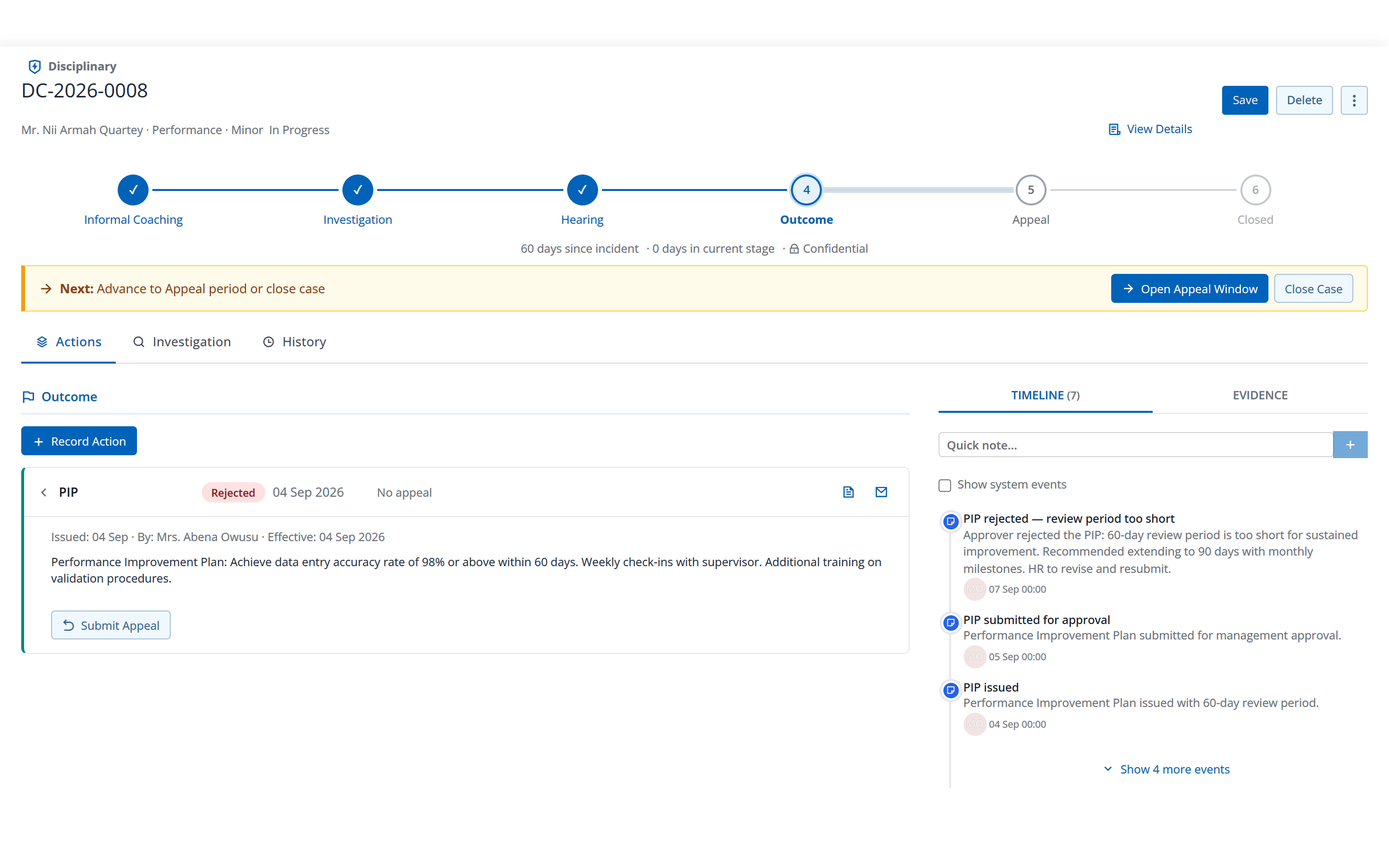
What each module records
Every one of these is live today. Where something is not built, it says so on this page rather than in a footnote after you have signed.
- Tasks.
- Work assigned to a person with a due date and a state, including recurring tasks that generate their own instances, and subtasks under a parent. It is the module that carries the things that fall between the other five.
- Disciplinary.
- A case with a stage, a next step, hearings, actions taken, a performance improvement plan where one applies, an appeal where one is raised, and a dated timeline of every event on it. The record is the point: a case that was handled properly and cannot be shown to have been handled properly is not much use. An approved improvement plan action can also open goals in Performance, where the employee and their manager check in against them; the case details stay here. See Performance →
- Separation and clearance.
- A separation request that moves through approval, with clearance steps recorded against it so the exit is a checklist somebody signs rather than an email thread. Leave encashment on separation has been specified and is not built — if that matters to your exit policy, raise it at the demo.
- Training.
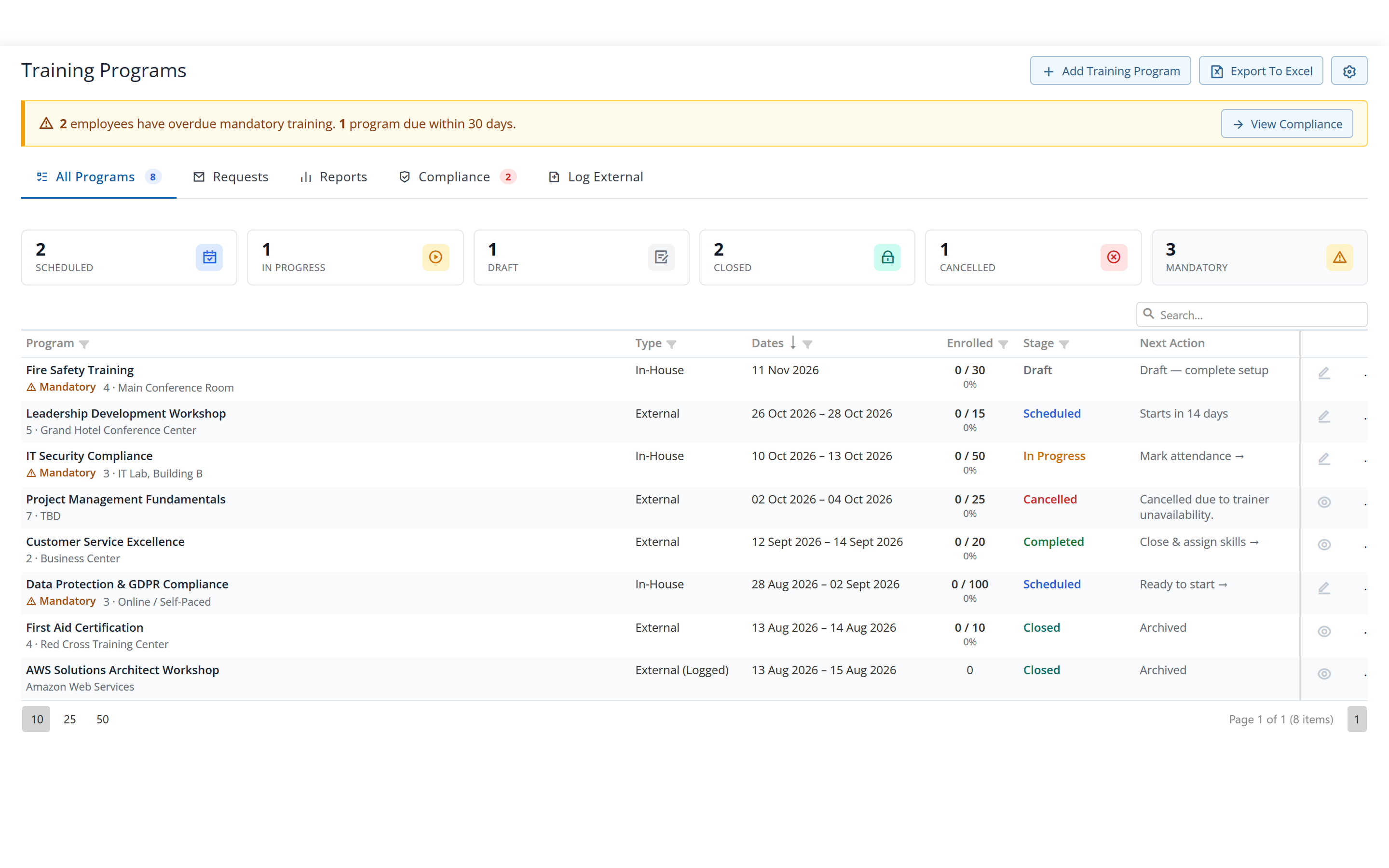
- Programmes, including externally-delivered ones logged after the fact, assessments against them, feedback, and training requests raised by employees for approval. Records reach the employee’s own self-service as well as the administrative side.
- Policy acknowledgement.
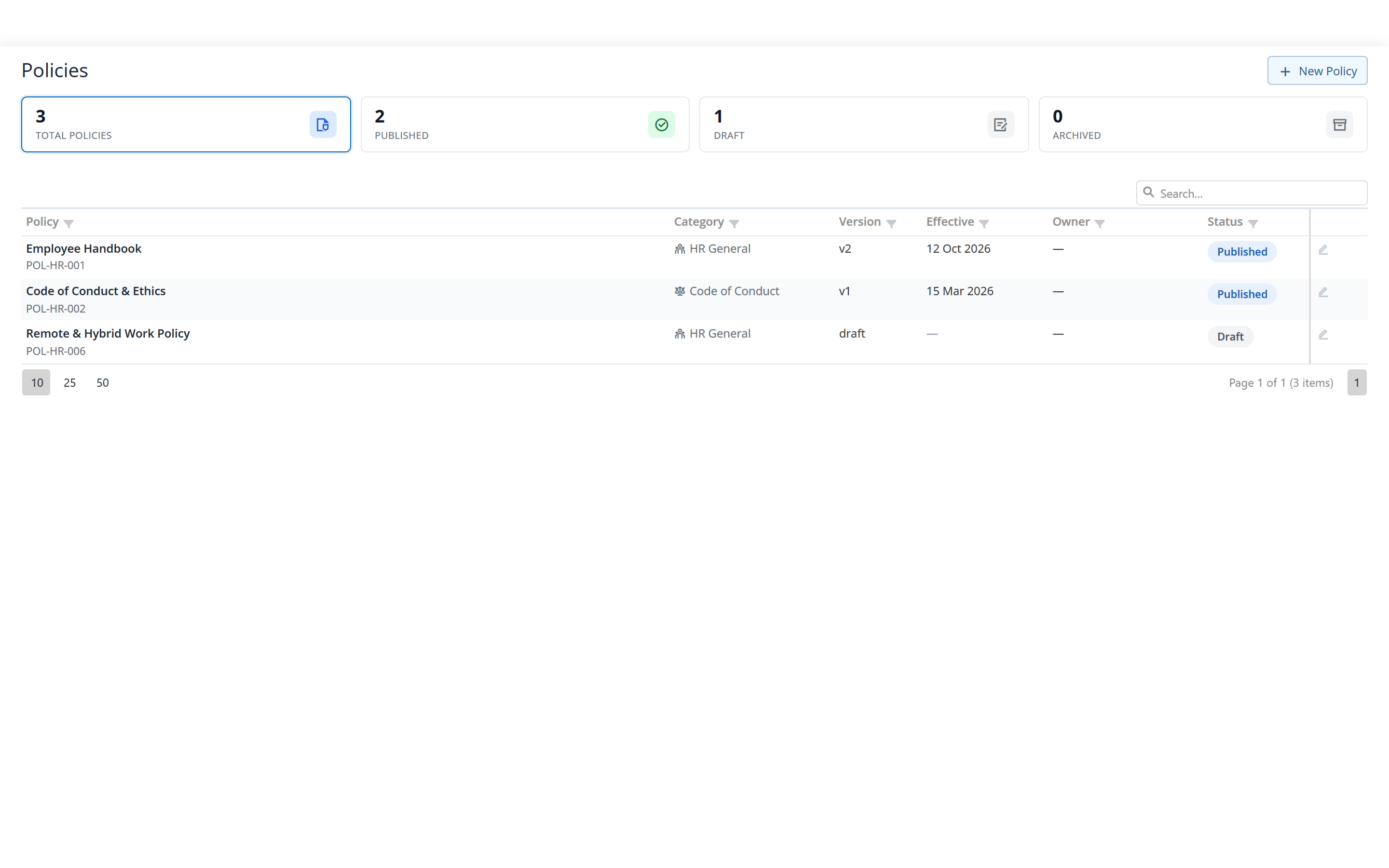
- A policy issued as the document it actually is — the viewer handles the file type — with the audience it applies to captured at the point of issue and each acknowledgement recorded against a name and a date. Drafts stay drafts until they are published.
- Surveys.
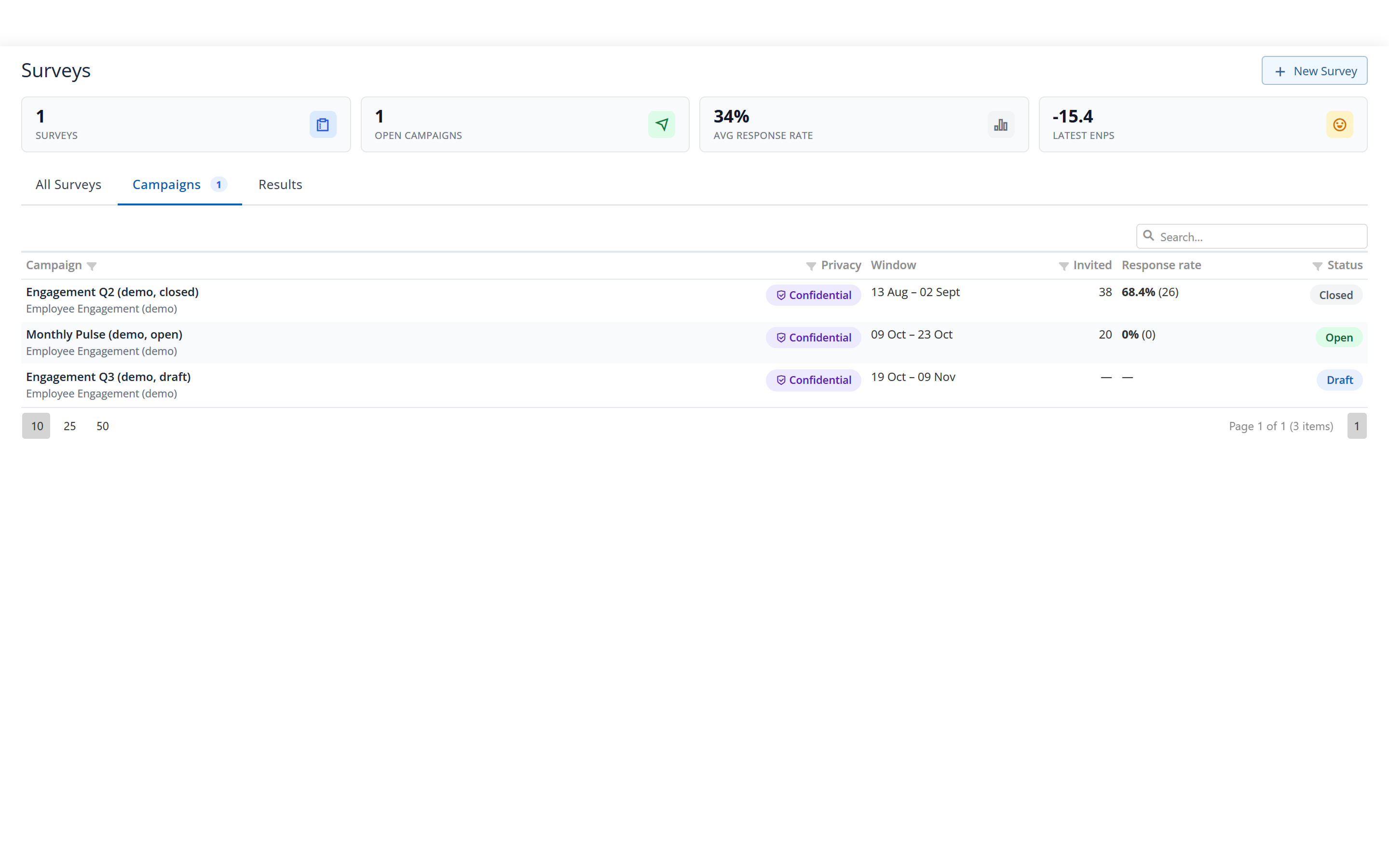
- A survey run as one or more campaigns, each opening and closing on its own dates. Responses are held on a confidential-but-tracked model: you can tell that someone answered without reading their answer as theirs, which is the arrangement that gets you honest answers.
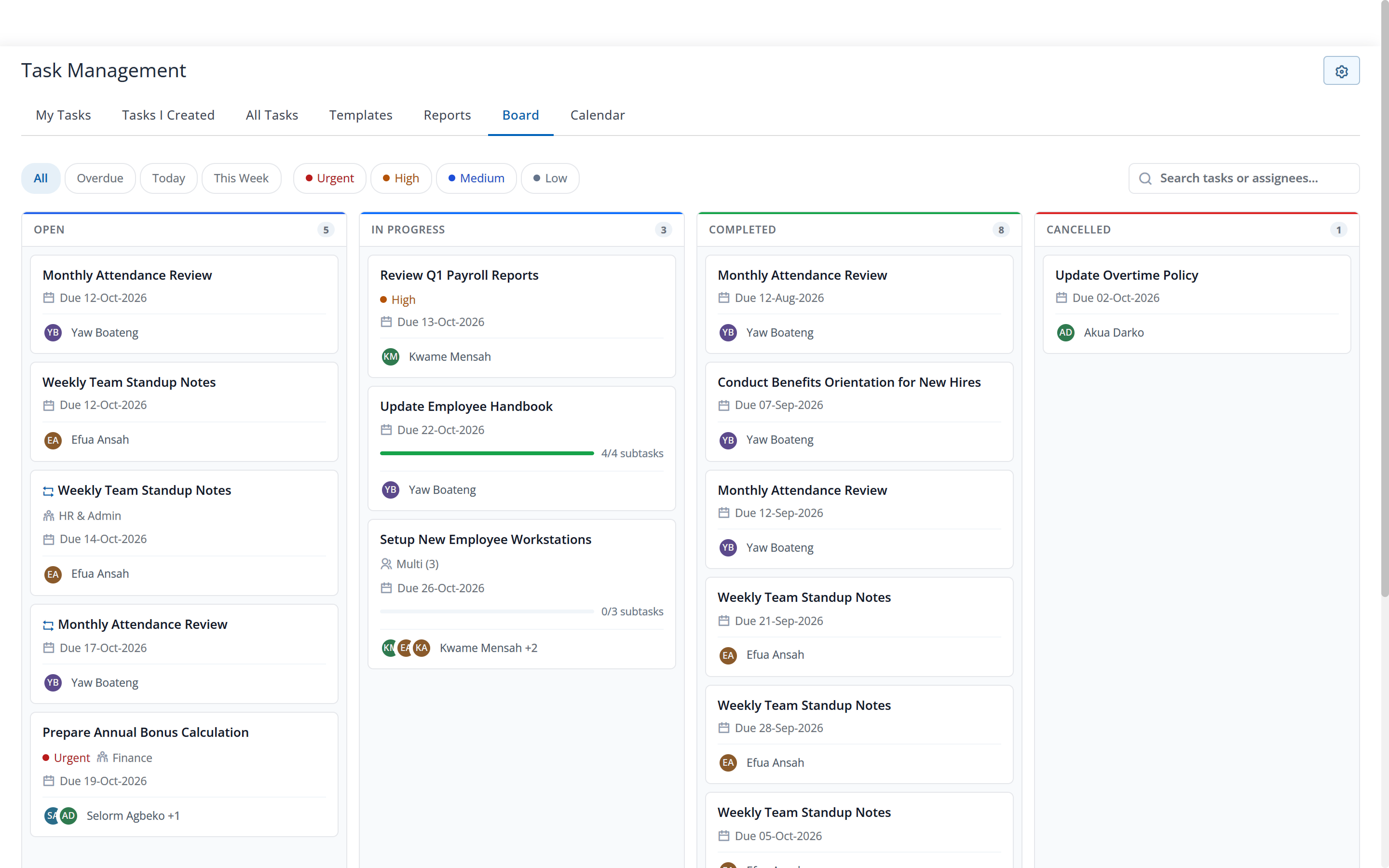
Why six modules behave like one
They were not built six times. They sit on the same foundations as payroll, which is what makes the seventh process a configuration rather than another system for your team to learn.
- One approval model.
- The same chain resolution as leave, loans and expenses — named approver, designation, reporting line, department manager — configured per request type, per company. How chains resolve →
- One layout.
- A list, a record, a state and a timeline, in the same places on the screen. Somebody who has used one of these six can use the others without being taught.
- The same permissions and the same record of change.
- Not a lighter set because the data is thought to be less sensitive. A disciplinary file is at least as sensitive as a payslip.
- Attachments carried to the approver.
- The evidence stays with the request rather than in the mailbox of whoever forwarded it.
- They reach the phone.
- Tasks, training, policies and surveys appear in the employee’s own self-service, on desktop and on the phone app. See Self-service →
What is not here
One gap, named. A module that does not exist is easier to plan around than one you discover is thinner than the demo suggested.
- Disciplinary on the phone.
- Deliberately absent. Case records stay on the administrative side, in front of the people handling them, rather than on the subject’s own device.
Before you ask us
Are employee survey answers anonymous?
They are confidential and tracked, which is a deliberate middle position. You can see who has responded, so you can chase a campaign to a useful response rate, and the responses are reported in a way that does not hand you an individual’s answers back with their name on. Say that plainly to your people before a campaign opens; a survey people do not trust is worse than no survey.
Can we add a seventh process of our own?
These six share one layout, one approval model and one permissions model, which is what makes a new process a configuration exercise rather than a build. Tell us the process at the demo and we will tell you honestly whether it is configuration or work.
Does a policy acknowledgement stand up as a record?
It records who acknowledged which version of which document, and when, against the audience the policy was issued to at the time it was issued. The document itself is held as the file it was published as, not as re-typed text.
What about recruitment and appraisal?
Both are new and available now, each as a module of its own and switched on per company. Recruitment covers jobs, a careers page, a pipeline, interview evaluations, offers accepted online and a handoff to the employee record, and its page lists what it does not do yet. Performance appraisal covers review cycles, goals and check-ins, peer feedback, probation reviews, calibration and improvement plans. Each has its own page under Factura HRMS.
The rest of Factura HRMS
The same records, the same approvals, the same audit.
- Payroll.
- The monthly cycle, the bank file and the statutory schedules. See Payroll →
- Self-service.
- Where tasks, training, policies and surveys reach the employee. See Self-service →
- Leave and attendance.
- Entitlement, accrual, balances, liability, work schedules and overtime. See Leave & attendance →
- Workflows and audit.
- Approval chains, permissions, two-factor sign-in and what is kept. See Workflows & audit →
- Analytics.
- Executive summary, cost, variance, liability, workforce and statutory. See Analytics →
- Performance.
- New: review cycles, goals and check-ins, peer feedback, probation, calibration and improvement plans. See Performance →
- Recruitment.
- New: jobs, a careers page, a pipeline board, offers accepted online and a handoff to the employee record. See Recruitment →
- All of it together.
- Back to Factura HRMS →
See a real pay run, end to end
Thirty minutes. We walk a full month — prepare, review, close, and produce the statutory files — and you can stop us anywhere.